Saturday, April 27, 2013

Build up Wealth and Stability When you Buy a ... - Inside Real Estate

Build up Wealth and Stability When you Buy a Home in Draper

If you are torn whether you should buy a home in Draper, or continue renting, then the answer is clearly buy a home in Draper. Studies actually show that owning a home is the greatest way to build up long-term household wealth, and the sooner you own a home, the faster your chances of building up wealth and equity. But when you buy a home in Draper, it is not all about monetary value, it is also about stability and knowing that you will come home every day to your home, not someone else?s that you are borrowing. No rent increases and the same monthly payment will make you feel more secure in your lifestyle and your budget. So are you are thinking about whether or not to buy, just say yes.

buy a home in Draper

A stunning 2-story home like this is hard to say no to. It is well cared for from the inside out and has a large secluded backyard with beautiful valley views in the front. You will never be disappointed with a home like this and there is plenty of space for you and your family. With 5-bedrooms and 3 baths, this home has so much room to grow. It features a gourmet kitchen with a large family room, and 5,165 square feet of living space. So come on in and lay your eyes on your new home.

Contact me today if you would like to talk about the benefits of buying a home over renting. You could not have chosen a better place to buy, because a home in Draper will be the best investment you make. Call, or register online today, and I will be here to answer all of your questions about how to buy a home in Draper.

Tags: buy a home in Draper, buy a home in Draper UT, buying a home in Draper, homes for sale in Draper, homes for sale in Draper UT

Source: http://inside-real-estate.com/craighawker/buy-a-house/build-up-wealth-and-stability-when-you-buy-a-home-in-draper/

jaleel white levi johnston 2013 srt viper scott walker recall fisker atlantic social darwinism wisconsin recall election

Beyond pen sets and paper weights: Gifts fit for a president

(Getty Images)

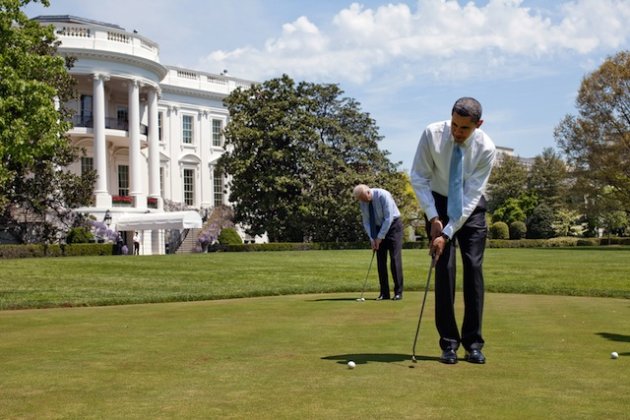
President Barack Obama and first lady Michelle Obama could stroll around the White House in matching Dior bathrobes and Brazilian soccer jerseys before he grabs his $7,750 golf bag or goes for a ride on his bamboo bicycle while listening to his new 2GB iPod shuffle ? all courtesy of the bewildering array of gifts that world leaders showered on the first couple in 2011.

The list also includes shirts, pens, sculptures, quite a few rugs (way to think outside the box, Afghan leaders!), the occasional flavored liquor, a deluxe package of items linked to the Polish-made video-game "Witcher 2: Assassins of Kings" and one small sword.

The State Department?s office of the chief of protocol on Friday released the list of presents American government officials received from foreign government officials.

[Related: Search and sort all gifts to Obama, Biden and their families.]

Not to worry: The Obamas won?t be keeping the $52,695 gift from Ali Bongo Ondimba, president of the Gabonese Republic. Like most of the items bestowed on the first couple, Ondimba's gift?a ?14? blue mask sculpture by Daum, on a 10? black and silver stand, enclosed in 34? x 16? x 13? red box? is at the National Archives. The U.S. requires all such gifts to be reported and turned over to the archives or other institutions for display. These are not, in short, bribes.

From the list, it appears that the only thing Obama "personally retained" from his 2011 haul is the book ?Genghis Khan and the Making of the Modern World,? by Jack Weatherford. The president received that work, which retails for $23.95 on Amazon, from his Mongolian counterpart, Tsakhiagiin Elbegdorj.

Next to each item is an entry entitled "circumstances justifying acceptance." For gifts to the Obamas, it reads: "Non-acceptance would cause embarrassment to donor and U.S. government."

Gifts to the first family totaled $243,970.96. Of that, items for the president himself totaled $194,125.33; those to the first couple ran $21,438.78; those to the first lady were $22,343.59; and those to daughters Malia and Sasha, $6,063.26.

A Yahoo News review of the gifts shows no obvious thread?not like in 2004, when George W. Bush received a bunch of guns, including a $10,000 sniper's rifle, and a "Worst-Case Survival Handbook." But golf is a big theme for this president, and there are some standouts. The second most-pricey present appears to have come from Sergio Cabral, governor of the state of Rio de Janeiro in Brazil. Cabral gave Obama a photograph by artist Vik Muniz entitled "Marat (Sebastiao)." Declared value? $40,000. (Symbolic value? Potentially priceless: Jean-Paul Marat was a radical journalist during the French Revolution. He was murdered in his bathtub.)

Polish Prime Minister Donald Tusk showed off his hometown pride by giving Obama a lavish package with "Witcher 2"-themed presents and Polish vodka. Here's how the chief of protocol describes the loot:

DVD, title: ?Best of the Witcher 2: Video Trailers for President Barack Obama,? distributor: Atari. Zubrowka Bison Grass Vodka. Book, title: ?Blood of Elves,? by Andrzej Sapkowski. Book, title: ?The Last Wish,? by Andrzej Sapkowski. Set of four 2? x 1.5? clear glass liqueur glasses, each has ?Zubrowka? engraved in white. 13.5? x 9.75? x 4.5? ?Witcher 2? gift box, inside are three golden ?Witcher 2? coins, a ?Witcher 2? book, ?Witcher 2? stickers, ?Witcher 2? make your own aircraft. 5.5? x 6.5? x 3? ivory-colored bust of ?Witcher 2? character ?Gwynbleioo,? a DVD box set of ?Witcher 2? bonus DVD, Game DVD, and Game Guide. ?Witcher 2? playing cards, and 5 wooden die in black sack with ?Witcher 2? emblem. 11.75? x 7? x 5? brown leather carrying case with handles and lock. Rec'd?5/28/2011. Est. Value?$497.08.

Then-French President Nicolas Sarkozy and French first lady Carla Bruni-Sarkozy gave Obama the "large, black Hermes golf accessory bag, including set of lock and key, and extra strap in bottom compartment" valued at $7,750?but didn't stop there. Non, monsieur. On other occasions, "Sarko" and his wife presented Obama with a "Lacoste white classic men's polo shirt," a fountain pen, "six black glass goblets in a plastic display case" and a 14"-tall "blue-gray glass sculpture of Bucephalus, Alexander the Great's horse."

And in August 2011, with Washington consumed by the debt-ceiling crisis, the Sarkozys again played to Obama's fondness for golf, giving him a "Crystal golf statuette by Baccarat, depicting a golfer with his iron pitched over his head in the moment before striking a ball. Black Hermes golf travel bag with canvas cover and carrying strap," all for an estimated value of $1,650. Were they done? Nope.

In December 2011, they gave Obama a Louis Vuitton "men's business bag" embossed with "B.O." That was valued at $2,310.

The Sarkozys' generosity didn?t stop there. A Hermes beach towel, a fancy Laguiole letter opener, a reusable grocery tote bag (in case the Obamas don?t want to pay the 5-cent D.C. plastic bag tax?), ?his and hers white, belted Dior bathrobes with ?Dior? embroidered on the breast pocket,? and one of the more amazing gifts on the list. Take it away, State Department chief of protocol:

17? tall Plexiglas sculpture, entitled ?Wrapping Flag Candy USA,? depicting an upright ?Tootsie Roll? with an American flag patterned wrapper, on a 6? x 6.75? x 0.75? clear Plexiglass base, accompanied by a certificate of authenticity.

If you think the good people at the chief of protocol?s office struggled with that one, check out their description of the $778 present from South Korean President Lee Myung-back and first lady Kim Yoon-ok

11? x 14.5? x 7? Korean, black lacquer jewelry box with mother of pearl inlay that depicts landscapes and birds, and has bureau-style doors with turtle-shaped doorknobs on the front and a drawer below, with an inner compartment that has three smaller drawers on the left and a section for hanging necklaces on the right.

Note to members of Congress: If Obama gives you a 9.5? by 12? signed and framed photo of Denmark?s queen and its prince, he?s regifting.

The Philippines ambassador and his wife gave Obama the bamboo bicycle ($1,060). German Chancellor Angela Merkel also thought ?golf!? She gave Obama a $1,400 care package comprising a ?Kramski putter set, includes: 35? HPP 340 putter with two protective club head covers, teal HPT 40 training console, HPS 30 Aim Aid set, book title: 'The Kramski Putt Philosophy.'"

You know what Qatar?s emir, Sheikh Hamad bin Khalifa al-Thani, probably didn?t hear from Obama? Anything resembling ?Oh, I already have one just like it.? The emir gave Obama a ?30? circumference gold and silver base with silver statues of two wild goats and a tree with gold clock hanging from it, depicting a desert scene.?

Canadian Prime Minister Stephen Harper seems to have been the only one to zero in on Obama?s other sports passion: basketball.

Harper gave Obama a basketball signed by the 2010-2011 Toronto Raptors.

The list also includes items to Vice President Joe Biden and other officials.

Three Senate Democrats, Jon Tester of Montana, Jack Reed of Rhode Island and Carl Levin of Michigan, each received silver Janbiyas from Dr. Rashad Mohamed Al-Alimi, the deputy prime minister for security forces of the Republic of Yemen. Janbiyas are thick, ornate knives that curve at the blade commonly worn at the belt.

Republican Sens. John McCain of Arizona and Susan Collins of Maine each were given an iPod Touch and an incense burner from King Abdullah II ibn Al Hussein, King of the Hashemite Kingdom of Jordan. (Recommended listening for that gift combination here.)

(Brent Stirton/Getty Images)

Chris Moody contributed to this report.

Source: http://news.yahoo.com/blogs/ticket/obama-foreign-gifts-7-750-golf-bag-40-163656900.html

dark knight rises trailer dark knight rises trailer vince young vince young evan longoria john edwards conocophillips

Oil slips to $93 a barrel ahead of US growth data

The price of oil slipped to near $93 a barrel Friday ahead of quarterly growth figures for the world's biggest economy.

By early afternoon in Europe, benchmark oil for June delivery was down 62 cents to $93.02 a barrel in electronic trading on the New York Mercantile Exchange. The contract rose $2.21 to close at $93.64 on Thursday after the U.S. Labor Department said the number of Americans seeking unemployment benefits fell last week by 16,000, suggesting that layoffs have declined.

Traders turned slightly cautious ahead of first-quarter U.S. economic growth figures due later Friday. Economists expect to see a significant improvement from the anemic 0.4 percent growth rate reported for the October-December quarter.

But analysts at Credit Agricole CIB in Hong Kong said the result "is unlikely to allay market concerns after a recent run of disappointing data indicates some decline in growth momentum." Recent reports have suggested that manufacturing is starting to weaken. Sales of previously occupied U.S. homes dipped in March.

Still, if prices hold near their current level, the Nymex contract would record its largest weekly gain in 10 months, while narrowing the gap to the Brent contract to less than $10 a barrel.

"This is somewhat surprising given that U.S. crude oil stocks continue to be at just short of a 23-year high and U.S. oil production has meanwhile achieved a 21-year high," said analysts at Commerzbank in Frankfurt. "Without new U.S. pipeline capacities ? which will not be available until the end of the year ? any further narrowing of the price spread is difficult to justify."

Brent crude, which is used to price oil from the North Sea used by many U.S. refiners, was down 54 cents to $102.87 a barrel on the ICE futures exchange in London.

In other energy futures trading on the Nymex:

? Gasoline fell 1.14 cents to $2.7992 per gallon.

? Heating oil declined 1.32 cents to $2.8666 a gallon.

? Natural gas lost 0.5 cent to $4.162 per 1,000 cubic feet.

___

Pamela Sampson in Bangkok contributed to this report.

Source: http://news.yahoo.com/oil-slips-93-barrel-ahead-us-growth-data-120756333.html

Jerry Lawler andy murray Samsung Galaxy S3 bachelor pad bachelor pad Green Coffee Bean Extract september 11

Saturday, April 13, 2013

Google buys social prediction startup Behavio

Google buys Behavio

Google has added yet another team to its ever growing list of acquisitions. Startup Behavio, announced it is joining the Mountain View crew and shutting down its closed alpha. The company built its short-lived product on top of Funf, a framework for collecting data from mobile phone sensors. The goal was to analyze things like physical location, contacts and other data about your activities and environment to monitor trends, then make predictions about behavior. The targets weren't just individuals though, but entire communities. It was even suggested that Behavio could predict the eruption of mass protests. Google has acknowledged the purchase, but isn't revealing any plans for company just yet. The internet giant's forays into preemptive and curated search offer an obvious application, however. We imagine applying some of the IP to Google Now is just one of the many potential uses. But its ad-serving algorithm could also clearly benefit from an injection of this technology.

Filed under: , ,

Comments

Via: The Verge

Source: Behavio

Source: http://feeds.engadget.com/~r/weblogsinc/engadget/~3/Od2y0vTHXmQ/

earthquake san diego Hurricane Isaac Sam Claflin Tony Farmer West Nile virus symptoms snooki amy schumer

James Madison University Sport & Recreation Management ...


From The Guardian?

Review by Steven Golob in KIN 332

The article that I chose to discuss in class is a huge talking point in the sport of soccer worldwide. Soccer is a sport of very rich history and pride in one?s club that a person chooses to support. Items such as stadium names and team colors are a very important part of these clubs that fans are very hesitant to part ways with. This article examines, further, one of the biggest names in the Barclay?s English Premier, Newcastle United. Not only is Newcastle one of the oldest soccer clubs in England, it may well display of the greatest examples of historical significance and fan loyalty as a whole. That being said, this article explains that although the relatively new club owner?s decision to sell the name of the club?s stadium in order to make a bit more money makes sense financially, the supporters of the club have been up in arms about the decision since it was only a rumor.?

Newcastle?s club owner, Mike Ashley, is merely doing what most other top-flight soccer clubs are doing in current times. They certainly aren?t even the first team to do this in the English Premier League, either. The article touches on other big-name clubs, such as Manchester City and Arsenal, in reference to the fact that their fans were not happy about the changing of their beloved stadium?s names at first, either. However, Mike Ashley has been able to run Newcastle quite stably with this stadium name-change producing more revenue for the club. It makes a lot of sense from a marketing standpoint as well. With a brand attached to the name of the stadium, it will be much easier to market the stadium as a whole. Using the old name, St. James?s Park, would be much more difficult even with the fans being able to identify that as their home stadium. Sports as a whole are so focused on making money from a marketing standpoint that they are very ready to toss tradition aside in order to keep teams afloat. It almost seems like a necessary evil that the fans might just have to accept in order to further enjoy sports.

Source: http://jmusportsbusiness.blogspot.com/2013/04/newcastle-stadium-name-change-lacks.html

uc berkeley harrison barnes brett ratner stevie nicks anchorman capybara duggars

Sunday, April 7, 2013

Home-visit programs can give kids healthier start?.really? | Parker ...

Texas State Senator Jane Nelson

Texas State Senator Jane Nelson

Before you read the article below??special to the Star-Telegram? by State Senator Jane Nelson, please read this PEW.com post?where you will learn, ?The Obama administration has announced that it will seek a substantial new investment to expand voluntary evidence-based home visiting programs.?

Is Senate Bill 426 an example of more social?engineering or community organizing? Do we really want more government ?help? at tax payers? expense??Once implemented, what government program ever ends? Have you ever seen the cost of a?government program decrease? What quantifiable measures will be in place?to monitor this ?program?? How?will you mesure its?success or failure? How can?we actually know if these programs have a positive impact until kids from these ?underpriviledged? homes become productive members of society? Seems to me all the ?evidence-based? data to which the article refers is little more than psychobabble, the purpose of which is to?defend a desired ourcome.

-

Our children are our most precious resource?that obviously deserve a safe loving environment in which to grow into productive citizens.

It just?makes more sense to me to?identify the true source of the problem and?prevent?it rather than to wait and treat it with a band-aid? a very expensive band-aid.

My?greatest disappointment?in reading?Nelson?s article is that it was?written by a Republican, and not by?someone in the Obama administration.

And we call ourselves CONSERVATIVES!

______________________________

Home-visit programs can give kids healthier start

By Sen. Jane Nelson, (Special to the Star-Telegram),?Apr. 06, 2013 -

Texas has a long tradition of promoting the healthy development of children, especially in the first years of their lives. We have made landmark investments in child-development programs such as the Nurse-Family Partnership, and now we stand ready to expand voluntary, high-quality and accountable programs via the Texas Home Visiting Act.

Texas? home visiting programs pair high-risk families with trained providers who provide support to parents during pregnancy and in the first years of children?s lives ? when public investments reap their biggest returns.

Most home visiting programs target first-time, low-income mothers, many of whom suffer from pre- and post-partum depression. Without this support, many parents have no resources to succeed in their role as their children?s first and best teachers.

The research is clear: Children with attachment disorders from neglect often have difficulty building trusting relationships and, in the most severe cases of neglect, may not develop bonds with others or even fully develop a conscience. Home visiting programs are voluntary and help provide the tools these vulnerable families need not only to reduce child abuse and neglect, but also to succeed in raising high-functioning, mentally stable, school-ready children.

This is an especially timely topic with April being Child Abuse Prevention Month.

We know the long-term benefit of these programs to high-risk families and the state, which is why I am working to promote Senate Bill 426, which expands accountable home visiting programs in Texas.

Our constituents sent us to Austin to make sure their tax dollars are spent wisely on programs and services that deliver measurable, positive results. SB426 aims to ensure that the state invests in evidence-based, voluntary home visiting programs that not only demonstrate benefits to children and families, but also have great cost benefits to the state.

In addition to improving the mental health of both the mother and child, these positive outcomes can lead to a reduction of many costly social problems. We know that if we get it right early on, we can solve many issues in our society today.

Home visiting programs can dramatically improve the likelihood that both parents and children will make positive contributions to the Texas economy today and for decades to come. However, if we want these outcomes, we must invest precious state resources in programs that are proven to work and then track their performances.

The Senate?s proposed budget includes $7.9 million to cover home visits for 2,000 more families than the Texas Health and Human Services Commission already reaches. But many thousands more qualify for services.

SB426 requires that at least 75 percent of appropriated home visiting funds go to evidence-based programs, meaning that credible scientific evidence shows they work. With this foundation, HHSC can evaluate the programs for effectiveness, ensure they are implemented with fidelity and make some investment in promising programs to encourage innovation for new programs to implement novel strategies for the hardest-to-reach families that desire services.

This legislation will also allow us to collect the information necessary to evaluate Texas home visiting programs so we can be sure funds are being spent in the most effective and efficient manner to produce the best outcomes for families and taxpayers. It will set quality standards for our home visiting programs and document the return on investment.

SB426 has strong bipartisan support at the Texas Capitol. In addition, a growing number of business, citizen and public policy groups have joined the efforts to pass this important legislation, which would create one of the most accountable, targeted and effective home visiting systems in the country. Texas taxpayers, parents, and ? most importantly ? our children deserve nothing less.

State Sen. Jane Nelson represents District 12.

Like this:

Like Loading...

Source: http://parkercountyblog.com/2013/04/07/home-visit-programs-can-give-kids-healthier-start/

campfire Kordell Stewart cesar chavez Wichita State hbo Buckwild Steve Alford

All about immigration: Green cards? Citizenship?

WASHINGTON (AP) ? This may be the year Congress decides what to do about the millions of immigrants living illegally in the U.S. And this may be the week when a bipartisan group of senators makes public details of the overhaul plan it has been negotiating for months.

But what will that be? Why now? And who are all these immigrants, once you get past the big round numbers?

A big dose of facts, figures and other information to help understand the current debate over immigration:

___

WHY NOW?

Major problems with U.S. immigration have been around for decades.

President George W. Bush tried to change the system and failed. President Barack Obama promised to overhaul it in his first term but never did.

In his second term, he's making immigration a priority, and Republicans also appear ready to deal.

Why the new commitment?

Obama won 71 percent of Hispanic voters in his 2012 re-election campaign, and he owes them. Last year's election also sent a loud message to Republicans that they can't ignore this pivotal voting bloc.

It's been the kind of breathtaking turnaround you rarely see in politics. Plus, there's growing pressure from business leaders, who want to make it easier for the U.S. to attract highly educated immigrants and to legally bring in more lower-skilled workers such as farm laborers.

___

WHAT'S THE PROBLEM?

Talk about "comprehensive immigration reform" generally centers on four main questions:

?What to do about the 11 million-plus immigrants who live in the U.S. without legal permission.

?How to tighten border security.

?How to keep businesses from employing people who are in the U.S. illegally.

?How to improve the legal immigration system, now so convoluted that the adjective "Byzantine" pops up all too frequently.

___

WHAT'S THE GANG OF EIGHT?

A group of four Democrats and four Republicans in the Senate, taking the lead in trying to craft legislation that would address all four questions.

Obama is preparing his own plan as a backup in case congressional talks fail. There's also a bipartisan House group working on draft legislation, but House Republican leaders may leave it to the Senate to make the first move.

___

COMING TO AMERICA

A record 40.4 million immigrants live in the U.S., representing 13 percent of the population. More than 18 million are naturalized citizens, 11 million are legal permanent or temporary residents, and more than 11 million are in the country without legal permission, according to the Pew Hispanic Center, a private research organization.

Those in the U.S. illegally made up about 3.7 percent of the U.S. population in 2010. While overall immigration has steadily grown, the number of immigrants in the U.S. illegally peaked at 12 million in 2007.

___

WE'RE NO. 1

The U.S. is the leading destination for immigrants. Russia's second, with 12.3 million, according to Pew.

___

WHERE FROM?

Twenty-nine percent of the foreign-born in the U.S., or about 11.7 million people, came from Mexico. About 25 percent came from South and East Asia, 9 percent from the Caribbean, 8 percent from Central America, 7 percent South America, 4 percent the Middle East and the rest from elsewhere.

The figures are more lopsided for immigrants living here illegally: An estimated 58 percent are from Mexico. The next closest figure is 6 percent from El Salvador, says the government.

___

WHERE TO?

California has the largest share of the U.S. immigrant population, 27 percent, followed by New York, New Jersey, Florida, Nevada, Hawaii and Texas, according to the Migration Policy Institute, a private group focused on global immigration issues.

California has the largest share of immigrants in the U.S. illegally, at 25 percent, followed by Texas with 16 percent. Florida and New York each has 6 percent, and Georgia has 5 percent, according to the Department of Homeland Security.

___

GETTING IN

Here's one way to think about the ways immigrants arrive in the U.S: Some come in the front door, others the side door and still others the back door, as laid out in a report from the private Population Reference Bureau.

?Arriving through the front door: people legally sponsored by their families or employers. Also refugees and asylum-seekers, and immigrants who win visas in an annual "diversity" lottery.

?Side door: legal temporary arrivals, including those who get visas to visit, work or study. There are dozens of types of nonimmigrant visas, available to people ranging from business visitors to foreign athletes and entertainers. Visitors from dozens of countries don't even need visas.

?Back door: Somewhat more than half of those in the U.S. illegally have come in the back door, evading border controls, Pew estimates. The rest legally entered, but didn't leave when they were supposed to or otherwise violated terms of their visas.

___

HOW DO WE KNOW?

It's widely accepted that there are more than 11 million immigrants in the U.S. illegally.

But how do we know that?

Those who are living here without permission typically aren't eager to volunteer that information. Number-crunchers dig into census data and other government surveys, make some educated assumptions, adjust for people who may be left out, mix in population information from Mexico and tend to arrive at similar figures.

The Department of Homeland Security estimates there were 11.5 million immigrants living in the U.S. illegally in January 2011. Pew puts the number at 11.1 million as of March 2011.

Demographers use what's called the "residual" method to get their tally. They take estimates of the legal foreign-born population and subtract that number from the total foreign-born population. The remainder represents those who are living in the country without legal permission.

___

IS IT A CRIME?

Simply being in the United States in violation of immigration laws isn't, by itself, a crime; it's a civil violation.

Entering the country without permission is a misdemeanor criminal offense. Re-entering the country without authorization after being formally removed can be felony.

Pew estimates that a little less than half of immigrants who lack legal permission to live in the U.S. didn't enter the country illegally. They overstayed their visas, worked without authorization, dropped out of school or otherwise violated the conditions of their visas.

___

WHAT'S IN A NAME?

There are varying and strong opinions about how best to refer to the 11 million-plus people who are in the U.S. without legal permission.

Illegal immigrants?

Undocumented workers?

Unauthorized population?

Illegal aliens?

The last has generally fallen out of favor. Some immigrant advocates are pressing a "Drop the I-Word" campaign, arguing that it is dehumanizing to refer to people as "illegal."

"Undocumented worker" often isn't accurate because many aren't workers, and some have documents from other countries. Homeland Security reports refer to "unauthorized immigrants," but the agency also reports statistics on "aliens apprehended."

___

DEFINITIONS, PLEASE:

?Legal permanent residents (LPRs): people who have permission to live in the U.S. permanently but aren't citizens. They're also known as "green card" holders. Most of them can apply for citizenship within five years of getting green cards. In 2011, 1.06 million people got the cards.

?Refugees and asylees: people who come to the U.S. to avoid persecution in their home countries. What's the difference between the two terms? Refugees are people who apply for protective status before they get to the U.S. Asylees are people who apply upon arrival in the U.S. or later.

?Naturalization: The process by which immigrants become U.S. citizens.

___

GOING GREEN

Is there an actual green card? Indeed there is.

It's the Permanent Resident Card issued to people who are authorized to live and work in the U.S. on a permanent basis. In 2010, the government redesigned them to add new security features ? and make them green again.

The cards had been a variety of colors over the years. New green cards are good for 10 years for lawful permanent residents and two years for conditional residents.

___

PATH TO CITIZENSHIP

There's a lot of talk about creating a "path to citizenship" for immigrants who are in the U.S. without legal status. But there's no consensus on what the route should be, and some conservatives reject the idea outright, seeing it as tantamount to amnesty.

There is a vigorous debate over what conditions immigrants who are in the U.S. illegally should have to satisfy to get citizenship ? paying taxes or fees, passing background checks, etc.

Some Republicans want to first see improvements in border security and in tracking whether legal immigrants leave the country when required. Obama doesn't support linking the path to citizenship with border security.

Some conservatives want to grant immigrants who are in the U.S. illegally some sort of legal status that stops short of citizenship. Some 43 percent of Americans think those who are here illegally should be eligible for citizenship, one-quarter think they should only be allowed to apply for legal residency, and about the same share think they should not be allowed to stay legally at all, according to a Pew Research Center survey released in March.

___

A NEW ACRONYM

Move over LPRs; make way for LPIs.

The president's draft immigration proposal would create a "Lawful Prospective Immigrant" visa. It would allow those who are here illegally to become legal permanent residents within eight years if they met certain requirements such as a criminal background check. They could later be eligible to become U.S. citizens.

___

THE A-WORD

Nothing stirs up a hornet's nest like talk of amnesty for immigrants who are in the country illegally, although there's a lot of disagreement over how to define the term.

A 2007 effort to overhaul the immigration system, led by Bush, failed in part because Republicans were dismayed that it included a process to give otherwise law-abiding immigrants who were in the country illegally a chance to become citizens. Critics complained that would be offering amnesty.

All sides know it's not practical to talk about sending 11 million-plus people back to their countries of origin. So one big challenge this time is finding an acceptable way to resolve the status of those who are in the country illegally.

___

GETTING A REPRIEVE

While the larger immigration debate goes on, the government already is offering as many as 1.76 million immigrants who are in the country illegally a way to avoid deportation, at least for now.

Obama announced a program in June that puts off deportation for many people brought here as children. Applicants for the reprieve must have arrived before they turned 16, be younger than 31 now, be high school graduates or in school, or have served in the military. They can't have a serious criminal record or pose a threat to public safety or national security.

Applications for the Deferred Action for Childhood Arrivals program are averaging 3,300 a day. By mid-March, nearly 454,000 people had applied and more than 245,000 had been approved, with most of the rest still under consideration.

In some ways, the program closely tracks the failed DREAM Act, which would have given many young illegal immigrants a path to legal status. Obama's program doesn't give them legal status but it at least protects them from deportation for two years.

___

HISTORY: DOING THE WAVE

The U.S. is in its fourth and largest immigration wave.

First came the Colonial era, then an 1820-1870 influx of newcomers mostly from Northern and Western Europe. Most were Germans and Irish, but the gold rush and jobs on the transcontinental railroad also attracted Chinese immigrants.

In the 1870s, immigration declined due to economic problems and restrictive legislation.

The third wave, between 1881 and 1920, brought more than 23 million people to the U.S., mostly from Southern and Eastern Europe, aided by cheaper trans-Atlantic travel and lured by employers seeking workers.

Then came the Great Depression and more restrictive immigration laws, and immigration went into decline for decades.

The fourth wave, still underway, began in 1965 with the end of immigration limits based on nationality. Foreign-born people made up 1 in 20 residents of the U.S. in 1960; today, the figure is about 1 in 8.

___

HISTORY: HERE A LAW, THERE A LAW

Until the late 1800s, immigration was largely a free for all. Then came country-by-country limits. Since then, big changes in U.S. immigration law have helped produce big shifts in migration patterns.

Among the more notable laws:

?1965 Immigration and Nationality Act: Abolished country-by-country limits, established a new system that determined immigration preference based on family relationships and needed skills, and expanded the categories of family members who could enter without numerical limits.

?1986 Immigration Reform and Control Act: Legalized about 2.7 million immigrants living in the U.S. illegally, 84 percent of them from Mexico and Central America.

?1990 Immigration Act: Increased worldwide immigration limit to a "flexible cap" of 675,000 a year. The number can go higher in some years if there are unused visas available from the previous year.

?1996 Immigrant Reform and Immigrant Responsibility Act. Expanded possible reasons for deporting people or ruling them ineligible to enter the U.S., expedited removal procedures, gave state and local police power to enforce immigration laws.

?Post-2001: In 2001, talk percolated about a new immigration plan to deal with unauthorized immigrants, guest workers and violence along the Mexican border. But the Sept. 11 terrorist attacks of 2001 put an end to that, amid growing unease over illegal immigration.

___

ABOUT LAST TIME. ...

The last big immigration legalization plan, in 1986, took six years to get done.

The law, signed by President Ronald Reagan, had three main components: making it illegal to hire unauthorized workers, improving border enforcement and providing for the legalization of a big chunk of the estimated 3 million to 5 million immigrants then in the country illegally.

The results were disappointing on two central fronts: The hiring crackdown largely failed because there was no good way to verify eligibility to work, and it took a decade to improve border security. As a result, illegal immigration continued to grow, fueled by the strong U.S. economy.

What did work as intended: Close to 3 million immigrants living in the U.S. without permission received legal status. By 2009, about 40 percent of them had been naturalized, according to Homeland Security.

___

LATINOS RISING

Census figures show that between 1960 and 2010, immigration from Europe declined while the numbers coming from Latin America and Asia took off. As the immigrants' points of origin changed, so did their destinations. Concentrations shifted from the Northeast and Midwest to the South and West.

A few Census Bureau snapshots:

?In 1960, there were fewer than 1 million people in the U.S. who were born in Latin America. By 2010, there were 21.2 million.

?In 1960, 75 percent of foreigners in the U.S. came from Europe. By 2010, 80 percent came from Latin America and Asia.

?In 1960: 47 percent of the foreign-born lived in the Northeast and 10 percent in the South. By 2010, 22 percent lived in the Northeast and 32 percent in the South.

___

THE FENCE

The fence between the U.S. and Mexico runs off and on for 651 miles along the 1,954-mile border. Most of it has been built since 2005. At some points, it's an 18-foot-high steel mesh structure topped with razor wire. At others, it's a rusting, 8-foot-high thing, made of Army surplus landing mats from the Vietnam War.

The fencing is one of the more visible manifestations of a massive effort over the past two decades to improve border security. The results of that effort are dramatic. Those images of crowds of immigrants sprinting across the border illegally while agents scramble to nab a few are largely a thing of the past.

Two decades ago, fewer than 4,000 Border Patrol agents worked along the Southwest border. Today there are 18,500.

Plummeting apprehension statistics are one measure of change: 357,000 last year, compared with 1.6 million in 2000. The numbers are down in part because fewer are trying to make it across.

The border isn't sealed but it is certainly more secure.

___

WHO'S HANGING AROUND

With tighter border security and years of economic difficulty in the U.S., it turns out that most of the immigrants who are in the U.S. without permission have been there for a while. Just 14 percent have arrived since the start of 2005, according to Homeland Security estimates. In contrast, 29 percent came during the previous five years.

At the peak in 2000, about 770,000 immigrants arrived annually from Mexico, most of them entering the country illegally. By 2010, the pace had dropped to about 140,000, most of them arriving as legal immigrants, according to Pew.

___

WHO'S LEAVING?

Mexicans, mostly. Since 1986, more than 4 million noncitizens have been deported. Deportations have expanded in the Obama administration, reaching 410,000 in 2012 from 30,000 in 1990. Most of those deported ? 75 percent ? are sent back to Mexico. Nearly half of those removed had prior criminal convictions. So far, the Obama administration has deported more than 1.6 million people.

___

TO NATURALIZE OR NOT

Lots of U.S. immigrants who are eligible to become naturalized citizens don't bother. As of 2010, about two-thirds of eligible immigrants had applied for citizenship, according to the Migration Policy Institute. That lags behind the rate in other English-speaking countries such as Australia and Canada, which do more to promote naturalization.

___

WHY BOTHER?

What's so great about citizenship?

Naturalization offers all sorts of rights and benefits, including the right to vote and run for office. Naturalized citizens are protected from losing their residency rights and being deported if they get in legal trouble. They can bring family members into the U.S. more quickly.

Certain government jobs and licensed professions require citizenship. Citizenship also symbolizes full membership in U.S. society.

In 2010, there was a 67 percent earnings gap between naturalized citizens and noncitizen immigrants, according to a report from the Migration Policy Institute. Even after stripping out differences in education, language skills and work experience, naturalized citizens earned at least 5 percent more.

___

SKIPPING IT

Nearly two-thirds of the 5.4 million legal immigrants from Mexico who are eligible to become U.S. citizens haven't done so, according to a Pew study released in February. Their rate of naturalization is half that of legal immigrants from all other countries combined. The barriers to naturalization cited by Mexican nonapplicants include the need to learn English, the difficulty of the citizenship exam and the $680 application fee.

___

WORKERS

How do immigrants who are in the U.S. without permission fit into the nation's jobs picture?

In 2010, about 8 million were working in the U.S. or trying to get work. They made up about 5 percent of the labor force, according to Pew. Among U.S. farm workers, about half are believed to be in the country illegally, according to the Government Accountability Office.

Business groups want a system to legally bring in both more highly skilled workers and more lower-skilled workers such as agricultural laborers. The idea is to hire more when Americans aren't available to fill jobs. This has been a sticking point in past attempts at immigration overhaul. Labor groups want any such revamped system to provide worker protections and guard against displacing American workers. Current temporary worker programs are cumbersome and outdated.

___

EMPLOYERS

Current law requires employers to have their workers fill out a form that declares them authorized to work in the U.S. Then the employer needs to verify that the worker's identifying documents look real. But the law allows lots of different documents, and many of them are easy to counterfeit.

The government has developed a mostly voluntary employment verification system called E-Verify, which has gradually gotten better. But so far just 10 percent of employers are using it, according to the Migration Policy Institute. The system is now required in varying degrees by 19 states.

___

FAMILIES VS. JOBS

A big question in the immigration debate centers on how much priority to give to the family members of U.S. citizens and permanent residents.

Under current law, the U.S. awards a much larger proportion of green cards to family members than to foreigners with job prospects here. About two-thirds of permanent legal immigration to the U.S. is family-based, compared with about 15 percent that is employment-based, according to the Migration Policy Institute. The rest is largely humanitarian.

Some policymakers think employment-based immigration should be boosted to help the economy. Advocates for families want to make sure any such action doesn't come at the expense of people seeking to join relatives in the U.S.

___

WHO CARES?

For all the attention being devoted to immigration right now, it's not the top priority for most people, even for most Hispanics. It ranked 17th on a list of policy priorities in a recent Pew Research Center poll. Among Hispanics, one-third said immigration was an extremely important issue to them, behind such issues as the economy and jobs, education and health care.

___

WHAT TO DO?

The public is divided on what should be done to fix immigration problems. In a recent Pew survey, 28 percent said the priority should be tighter restrictions on immigration, 27 percent said creating a path to citizenship, and 42 percent thought both approaches should get equal priority.

___

A VIEW FROM THE SOUTH

Is life actually better in the U.S.? A little more than half of Mexican adults think so, according to a 2012 Pew Global Attitudes poll. Thirty-eight percent said they'd move to the U.S. if they had the chance. Nineteen percent said they'd come even without authorization.

___

Sources: Pew Hispanic Center, Migration Policy Institute, Department of Homeland Security, Census Bureau, Government Accountability Office, Population Reference Bureau, Encyclopedia of Immigration.

___

Associated Press writers Alicia Caldwell and Erica Werner contributed to this report.

___

Follow Nancy Benac on Twitter: http://www.twitter.com/nbenac

Source: http://news.yahoo.com/immigration-green-cards-citizenship-121159749.html

cat in the hat green eggs and ham wiz khalifa and amber rose oh the places you ll go blunt amendment justin bieber birthday read across america

Google uses Facebook Home announcement to plug other Google services

By Iain Rogers MADRID, April 7 (Reuters) - If Saturday's La Liga match at home to Real Mallorca was a test to see if Barcelona could cope without Lionel Messi, they passed it with flying colours. The World Player of the Year was ruled out with a damaged hamstring, the first league game he has missed through injury since the 2010-11 season, but Barca made light of his absence with a crushing 5-0 victory that maintained their 13-point lead over second-placed Real Madrid with eight games left. ...

Source: http://news.yahoo.com/google-uses-facebook-home-announcement-plug-other-google-020209370.html

mad cow pennsylvania primary jerome simpson hand sanitizer obama on jimmy fallon google drive pilar sanders